
Introduction
In the modern construction and architectural landscape, Scan to BIM (Building Information Modeling) is transforming the way we approach building documentation, renovation, and facility management. By capturing accurate, real-world data using laser scanning technology and converting it into digital 3D models, Scan to BIM bridges the gap between the physical and digital worlds. This blog provides a comprehensive overview of Scan to BIM, its working process, key benefits, practical applications, and why it is becoming an essential tool for Architecture, Engineering, and Construction (AEC) professionals.
What is Scan to BIM?
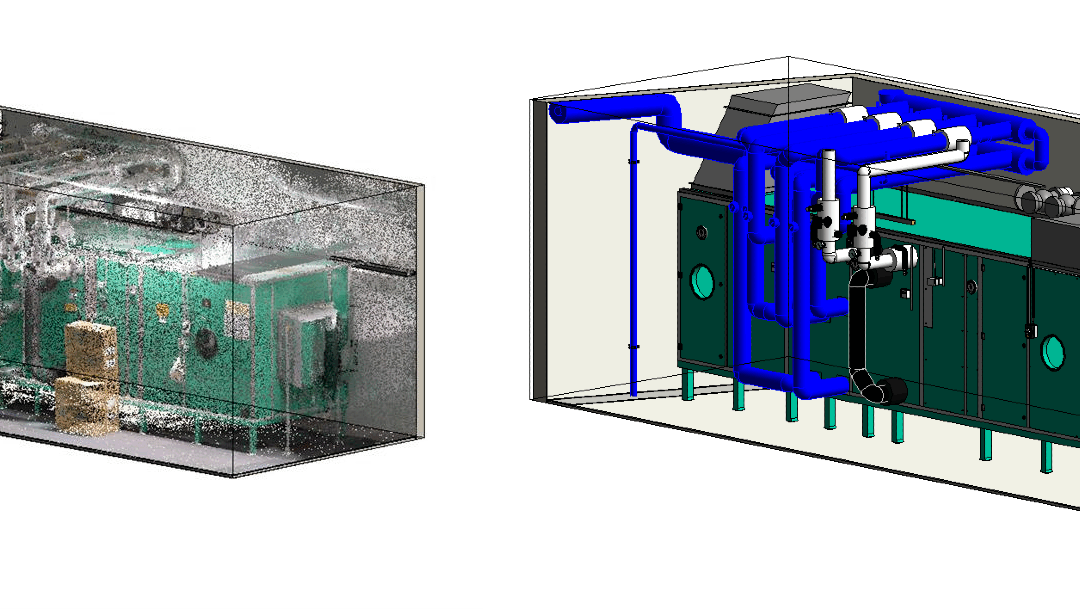
Scan to BIM refers to the process of collecting detailed data about an existing building or site using 3D laser scanners or LiDAR technology, and transforming this data into a BIM model. The resulting model accurately reflects the as-built conditions of the building, including its architectural, structural, and MEP (Mechanical, Electrical, and Plumbing) components. Unlike traditional surveying methods, Scan to BIM captures millions of data points (point clouds), providing unmatched detail and accuracy for creating digital replicas of physical spaces.
How Does the Scan to BIM Process Work?
The Scan to BIM workflow typically involves the following steps:
- Site Scanning: High-definition laser scanners are used on-site to capture precise measurements and spatial data, generating a “point cloud.”
- Data Registration: Multiple scans from different angles are combined and aligned into a unified point cloud model.
- Data Processing: The point cloud data is imported into specialized BIM software (such as Autodesk Revit).
- BIM Modeling: Skilled BIM professionals convert the point cloud into a structured BIM model, including walls, floors, ceilings, MEP elements, and other building components.
- Quality Check and Delivery: The BIM model is reviewed, refined, and delivered to the client for various purposes, from design to facility management.
Benefits of Scan to BIM for Construction Projects
- High Accuracy: Captures minute details and reduces errors compared to manual surveys.
- Time Efficiency: Significantly faster than traditional measuring and modeling techniques.
- Better Visualization: Provides detailed 3D models that offer better visualization for planning and design.
- Improved Collaboration: Enhances coordination between architects, engineers, and contractors through accurate models.
- Cost Savings: Minimizes costly errors, rework, and site visits.
- Supports Renovation & Retrofit Projects: Ideal for projects where up-to-date building documentation is unavailable.
Common Applications of Scan to BIM
- Renovation & Restoration Projects: Accurately model old or historical structures.
- Facility Management: Maintain up-to-date digital records of building conditions.
- Construction Verification: Validate construction accuracy by comparing as-designed vs. as-built models.
- Space Management & Interior Fit-Out: Plan office layouts or retail spaces efficiently.
- MEP Design & Clash Detection: Facilitate MEP coordination in complex renovation projects.
Scan to BIM vs Traditional Survey Methods
| Aspect | Traditional Survey | Scan to BIM |
| Accuracy | Moderate | Very High |
| Speed | Time-consuming | Faster data collection |
| Detail Level | Limited | Highly detailed with millions of data points |
| Visualization | 2D drawings | 3D intelligent models |
| Cost | Lower upfront, but more errors | Higher upfront but lower long-term costs |
Challenges and Considerations
- Initial Investment: Equipment and skilled resources can be costly.
- Complexity: Requires specialized software and experienced modelers.
- Data Management: Handling large point cloud files can be hardware-intensive.
- Project Scope: Accuracy level (LOD – Level of Detail) must be defined clearly to avoid scope creep.
Final Thoughts: Is Scan to BIM Right for Your Project?
If your project involves renovation, restoration, or facility upgrades, Scan to BIM can offer significant benefits in terms of accuracy, efficiency, and project coordination. Despite some initial investment, the long-term savings and improved project outcomes make it a valuable choice for modern AEC professionals. As the AEC industry continues to evolve, adopting innovative solutions like Scan to BIM is not just an option—it is becoming a necessity for staying competitive and delivering high-quality projects.
Need professional Scan to BIM services?
0 Comments