
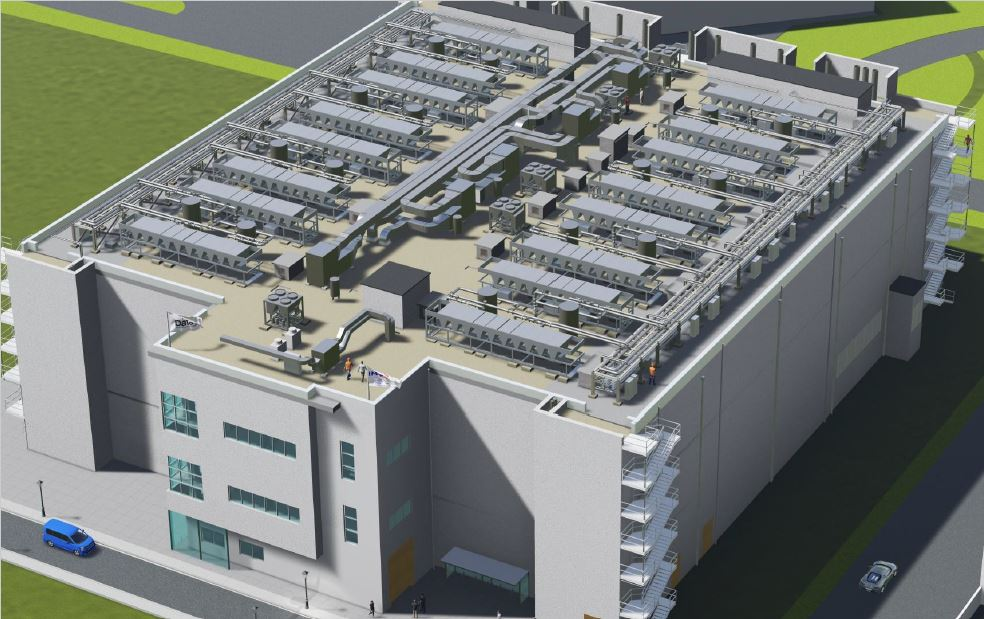
The Complexity of Data Center Design
Unlike many other building types, data centers contain dense networks of electrical systems, cooling equipment, cable trays, server racks, and backup power infrastructure. These elements must be carefully planned within limited space while maintaining accessibility for maintenance and future expansion.Traditional 2D design methods often struggle to represent these complex relationships clearly. As a result, conflicts between systems may only become visible during construction, leading to delays, rework, and increased costs.BIM addresses this challenge by providing a detailed 3D digital representation of the facility, allowing project teams to visualize how every system interacts within the building environment before construction begins.
BIM for Complex MEP Systems
MEP systems form the backbone of a data center. Electrical distribution, cooling systems, fire protection, and communication networks must operate together seamlessly to maintain optimal performance and prevent disruptions. Using BIM, engineers can create accurate digital models of all MEP components, including equipment layouts, cable routing, piping systems, and ventilation networks. This approach enables designers to evaluate spatial requirements, identify potential constraints, and optimize system layouts.By integrating all disciplines within a single coordinated model, BIM helps teams ensure that each system is designed with full awareness of the surrounding infrastructure.
Coordination and Clash Detection
One of the most valuable features of BIM in data center projects is clash detection. In complex environments with multiple systems occupying the same space, conflicts between components are common. For example, a cable tray might intersect with a ventilation duct, or a pipe may interfere with structural elements. If these issues are discovered during construction, they can cause significant delays and additional costs.BIM software can automatically detect such clashes within the digital model. Project teams can then resolve these conflicts during the design phase, long before construction begins. This proactive coordination greatly reduces the risk of on-site modifications and ensures a smoother construction process.
Improved Collaboration Between Project Teams
Data center projects involve a wide range of stakeholders, including architects, structural engineers, MEP designers, contractors, and facility operators. Effective collaboration between these teams is essential for project success. BIM provides a centralized digital environment where all disciplines can access and update the project model. This shared platform improves communication, reduces misunderstandings, and ensures that everyone is working with the latest project information.Through coordinated models and collaborative workflows, BIM supports better decision-making and helps teams respond quickly to design changes or project challenges.
Digital Visualization and Decision Support
Another major advantage of BIM is the ability to visualize the entire data center in a realistic 3D environment. This allows project stakeholders to better understand the spatial relationships between systems and evaluate design options before construction begins.
For example, designers can assess equipment accessibility, verify maintenance clearances, and analyze equipment placement to optimize operational efficiency. Facility operators can also review the digital model to ensure that the final design meets long-term operational requirements. This level of visualization helps reduce uncertainty and supports more informed decision-making throughout the project lifecycle.
Enhancing Project Efficiency and Quality
By improving coordination, reducing clashes, and supporting better collaboration, BIM significantly enhances both the efficiency and quality of data center projects. Design errors can be identified early, construction workflows can be optimized, and project timelines can be better controlled. Furthermore, the BIM model can continue to deliver value even after construction is completed. The digital model can serve as a reliable reference for facility management, maintenance planning, and future upgrades.
Conclusion
As data centers continue to grow in complexity and importance, advanced digital tools are becoming essential for delivering reliable and efficient facilities. BIM provides the visibility, coordination, and collaboration required to manage the intricate systems that define modern data centers. By enabling precise design coordination, effective clash detection, and improved collaboration between project teams, BIM plays a crucial role in ensuring the successful delivery of high-performance data center infrastructure.
0 Comments