
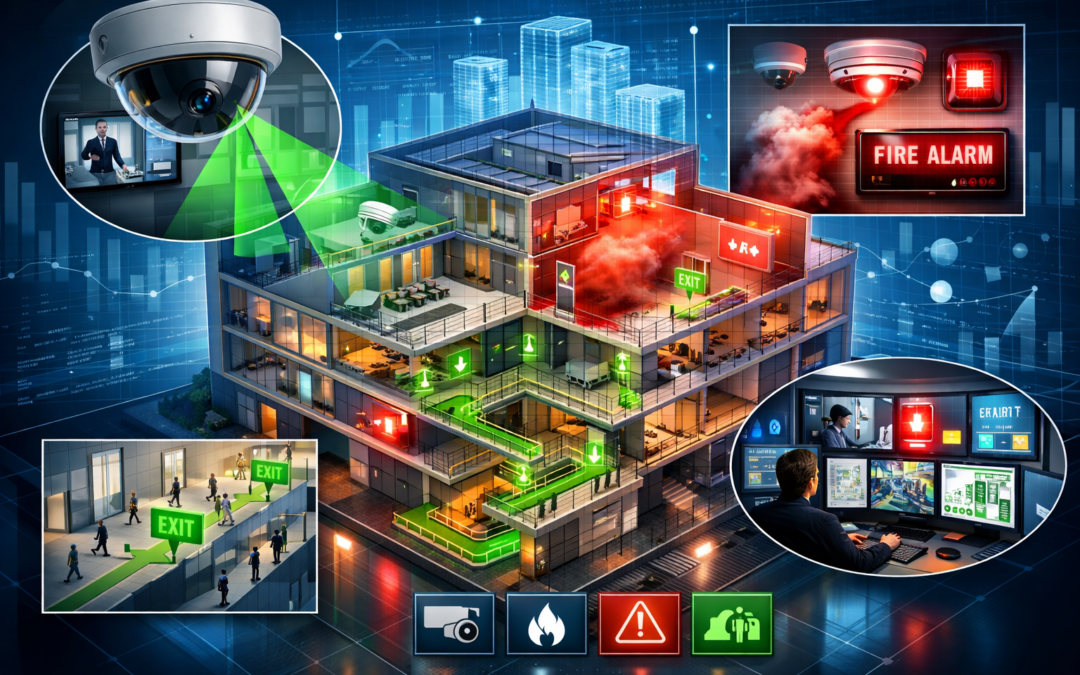
As buildings become smarter, safer, and more connected, security system design is no longer limited to 2D layouts and rule-of-thumb planning. Building Information Modeling (BIM) is transforming how CCTV systems, fire detection, and evacuation strategies are designed, simulated, and optimized—long before construction or installation begins.
By integrating security systems into a coordinated 3D digital environment, BIM enables stakeholders to visualize risks, test scenarios, and make data-driven decisions, resulting in safer and more resilient buildings.
1. BIM as the Foundation for Smart and Secure Buildings
BIM acts as a single source of truth for security system design, enabling collaboration between architects, MEP engineers, security consultants, and facility managers. When combined with IoT, AI, and digital twin technologies, BIM evolves from a design tool into a real-time security management platform.
Key Business Benefits:
- BIM serves as the referential keystone for tracking and managing asset security systems
- Improved safety and compliance
- Reduced installation and lifecycle costs
- Data-driven security decisions
- Enhanced building resilience and user confidence
2. Fire Alarm & Smoke Detector Placement Using 3D Simulations
Fire detection systems are critical life-safety components, and their performance depends heavily on accurate placement and coordination. BIM enables designers to move beyond code compliance toward performance-based fire safety design.
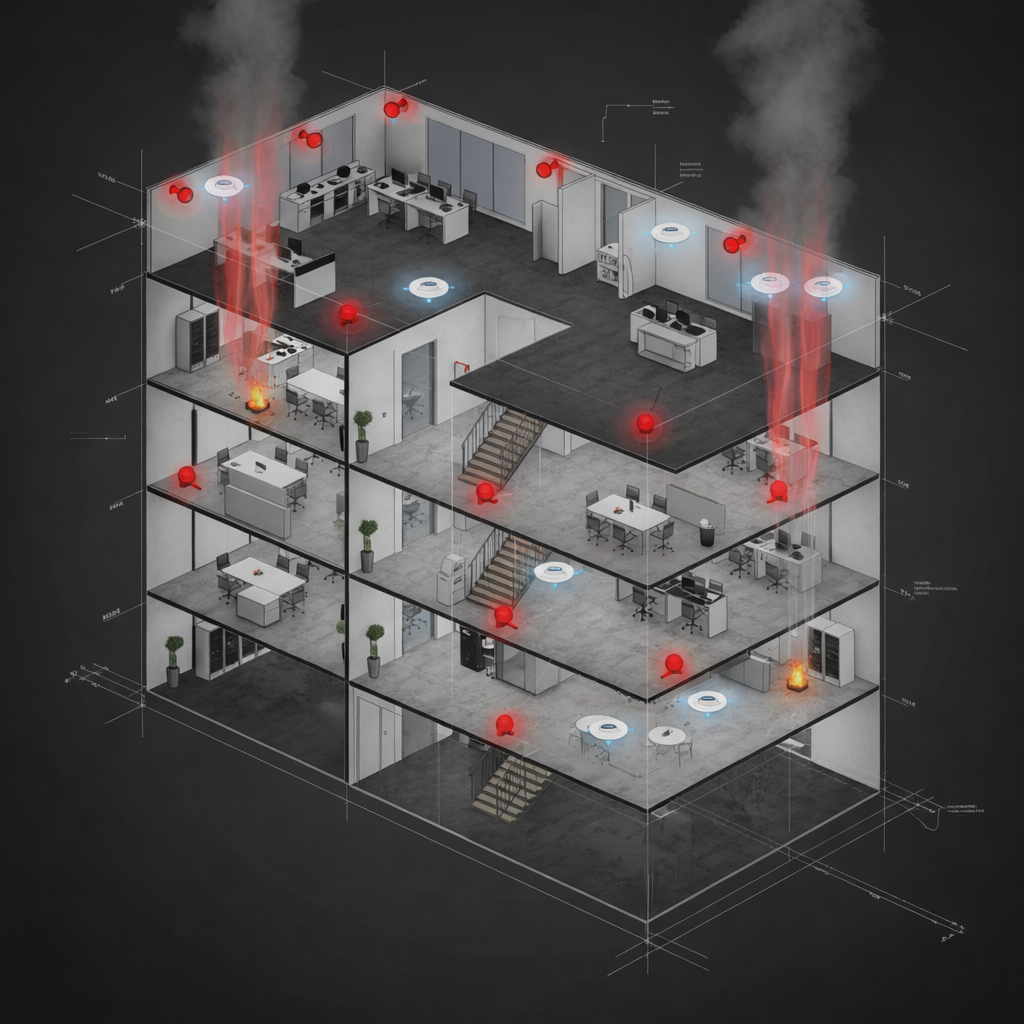
How BIM Enhances Fire Detection Planning:
- 3D Simulation of Smoke Movement: BIM tools can simulate smoke propagation based on room volume, ceiling geometry, and airflow.
- Accurate Detector Placement: Smoke and heat detectors are positioned based on actual spatial conditions, not just 2D symbols.
- System Coordination: Fire alarms, sprinklers, emergency lighting, and mechanical systems are coordinated within a single model.
- Maintenance-Friendly Design: BIM data supports future inspection, testing, and replacement planning.
Result:
- Faster fire detection and alerts
- Improved occupant safety
- Fewer system conflicts during construction
3. Smart Evacuation Routes and Occupancy Analytics
During emergencies, every second matters. BIM enables the design of intelligent evacuation strategies by combining building geometry with real-time data and analytics.
How BIM Supports Smart Evacuation:
- Optimized Escape Routes: BIM analyzes travel distances, door widths, stair capacities, and exit visibility to design efficient evacuation paths.
- Occupancy-Based Planning: When integrated with IoT sensors, BIM can monitor real-time occupancy and crowd density.
- Dynamic Evacuation Scenarios: Evacuation routes can adapt based on fire location, blocked exits, or crowd congestion.
- Emergency Response Integration: First responders gain access to accurate digital building layouts, improving response time and coordination.
Result:
- Reduced evacuation time
- Safer crowd movement
- Enhanced emergency preparedness
4. Using BIM for CCTV Camera Coverage Planning
Traditional CCTV planning often relies on 2D drawings, which can lead to blind spots, poor camera angles, and costly rework. BIM overcomes these challenges by enabling 3D visualization and simulation of camera coverage.
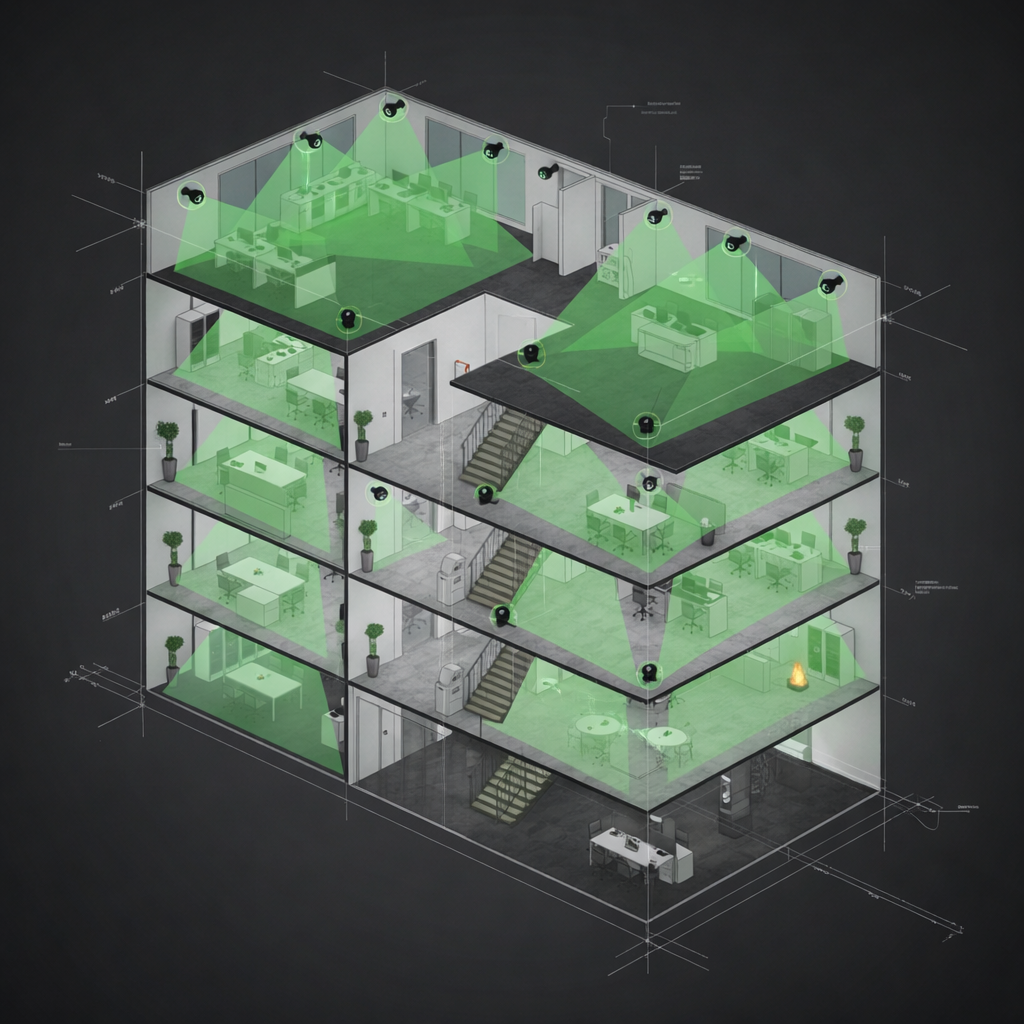
How BIM Improves CCTV Design:
- 3D Field-of-View Analysis:BIM models allow designers to simulate camera angles, range, and resolution to identify blind spots in real time.
- Optimal Camera Placement:Cameras can be positioned considering walls, columns, furniture, lighting conditions, and ceiling heights.
- Coordination with Other Systems:BIM ensures CCTV systems do not clash with HVAC ducts, lighting fixtures, or structural elements.
- Compliance & Documentation:Camera locations and coverage zones can be validated against security standards and client requirements.
Result:
- Reduced security blind spots
- Optimized number of cameras
- Lower installation and rework costs
Conclusion
BIM is redefining how security systems are designed, deployed, and managed in modern buildings. From CCTV coverage optimization and fire detection accuracy to smart evacuation planning, BIM ensures security systems are proactive, coordinated, and future-ready.
For organizations aiming to deliver smart, safe, and intelligent buildings, BIM is no longer optional—it is essential.
0 Comments